Paris Photo 2026: A Journey Through Photography, From Icons to New Perspectives

Every year, Paris Photo finds new ways to surprise us. Monumental in scale, remarkably diverse, and full of unexpected discoveries.
From Stanley Kubrick’s early photographs to contemporary explorations of identity, memory, and consumerism, Paris Photo continues to reveal the extraordinary diversity of the photographic medium.

Stanley Kubrick: Before the Cinema
One of the fascinating encounters was with the early photographic work of Stanley Kubrick.
Long before becoming one of the most influential filmmakers of the twentieth century, Kubrick began his career as a photographer for Look magazine, working there between 1946 and 1950.
His photographs of everyday American life already reveal an exceptional sensitivity to composition, lighting, and human behavior. These qualities would later become defining elements of his cinematic language.
Seeing his photograph Woman Reading a Newspaper (1948) offers an opportunity to rediscover Kubrick not as the director, but as a young photographer developing his remarkable visual eye.

Joseph Szabo: American Teenagers
Another highlight was the work of Joseph Szabo, whose photographs of American teenagers remain as compelling today as when they were first taken.
Best known for his series Almost Grown and Teenage, Szabo documented the lives of young people during the 1970s and 1980s, capturing moments of freedom, rebellion, intimacy.
Through these images Szabo reveals its contradictions: confidence and vulnerability, independence and insecurity, spontaneity and self-consciousness.
Silvia Rosi: Photography, Identity, and Memory
Moving into contemporary photography, Silvia Rosi offers a very different perspective on the medium.
Born in Italy to Togolese parents, Rosi explores questions of identity, migration, family history, and cultural heritage through carefully constructed photographic narratives.
Her work Disintegrata di profilo (2024) reflects her interest in how images can communicate experiences that go beyond conventional portraiture.
Through staged compositions, personal references, and visual experimentation, Rosi challenges established ideas of representation while exploring the relationship between individual identity and collective memory.

Thomas Devaux: Reflections on Contemporary Consumerism
Among the contemporary discoveries, we were particularly drawn to the work of Thomas Devaux.
The French artist explores the relationship between desire, consumption, beauty, and the images that surround us.
In his series The Shoppers, Devaux photographs people in supermarkets, transforming ordinary moments of consumer life into carefully composed, almost painterly images.
His practice also incorporates reflective surfaces, light, and layered visual effects, creating works that blur the boundaries between photography, abstraction, and sculpture.
What makes Devaux's approach especially interesting is the way he turns familiar subjects into opportunities for reflection.

Centre Pompidou: Revealing the History of Photography
At the beginning of our visit, we also explored Révéler, a special presentation drawn from the Centre Pompidou's photography collection.
Bringing together approximately 100 works by 30 historical and contemporary artists, including recent acquisitions, the exhibition offered a valuable perspective on the evolution of photographic practices.
Presented in the context of photography's bicentenary, Révéler highlighted the medium's extraordinary capacity for reinvention.
I

Paris Photo is undoubtedly vast, sometimes overwhelming, but this diversity is precisely what makes it so compelling.
Beyond the iconic images and celebrated names, the real pleasure lies in discovering unexpected connections, encountering unfamiliar artists, and finding new ways of looking at the world.


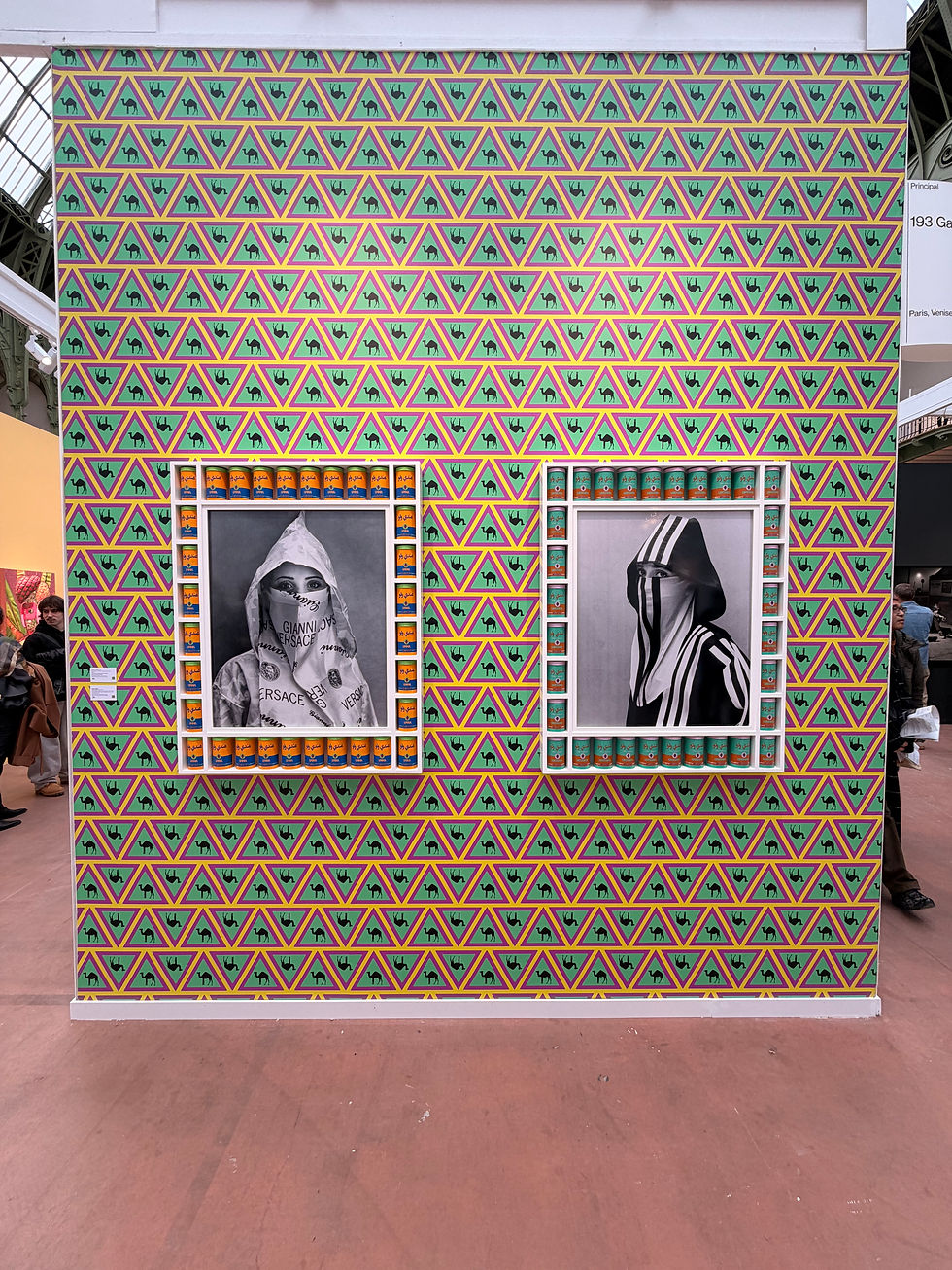
The Good Art Deal — Paris Photo 2026, Grand Palais, Paris.


Comments